

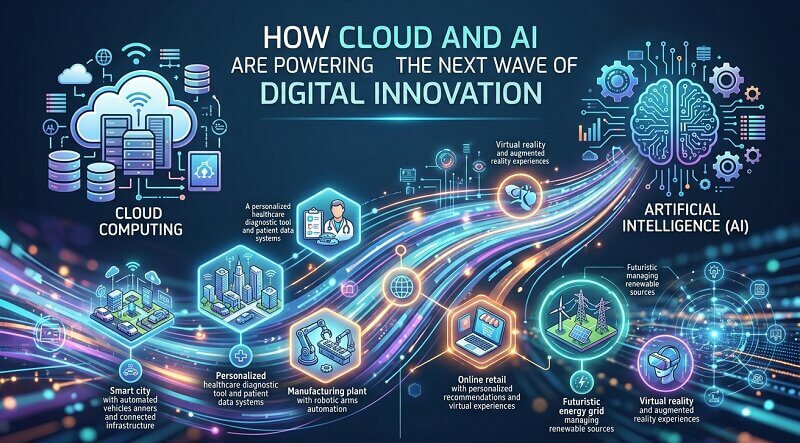
The world is entering a powerful phase of technological transformation as a new wave of AI innovation is rolling out globally. Artificial intelligence is no longer limited to research labs or tech companies; it is now shaping industries, businesses, education, healthcare, and everyday digital experiences. From smarter automation to advanced generative models, AI is rapidly changing how people work, communicate, and make decisions. This global shift is creating new opportunities while also redefining the future of digital growth.
Global Expansion of AI Technologies
Rapid Adoption Across Industries
Artificial intelligence is being adopted across multiple industries at a faster pace than ever before. Businesses in finance, healthcare, retail, and education are integrating AI tools to improve efficiency and reduce manual work. This rapid adoption is driven by the need for automation, accuracy, and faster decision-making in competitive markets.
Growth of Cloud-Based AI Systems
Cloud computing has played a major role in the expansion of AI technologies worldwide. Companies now use cloud-based AI platforms to access powerful machine learning tools without investing in expensive infrastructure. This shift has made AI innovation more accessible to startups and small businesses globally.
Increasing Investment in AI Development
Governments and private organizations are heavily investing in artificial intelligence research and development. These investments are focused on building smarter systems, improving data processing capabilities, and enhancing AI safety. As funding increases, innovation continues to accelerate at a global level.
Impact of AI on Modern Digital Economy
Transformation of Business Operations
AI is reshaping how businesses operate by automating repetitive tasks and improving productivity. Companies are using intelligent systems for customer support, data analysis, and workflow management. This transformation allows organizations to focus more on strategic growth and innovation.
Rise of AI-Powered Digital Services
The digital economy is witnessing a rise in AI-powered services that provide personalized experiences. From recommendation engines to virtual assistants, AI is improving user engagement across platforms. This shift is helping businesses build stronger connections with their customers.
Changing Workforce Dynamics
AI innovation is also influencing the global workforce. While some traditional roles are being automated, new job opportunities are emerging in AI development, data science, and machine learning. This transition is encouraging professionals to upgrade their skills and adapt to evolving technologies.
Future Trends in Artificial Intelligence Development
Growth of Generative AI Models
Generative AI is becoming one of the most important trends in modern technology. These models are capable of creating text, images, audio, and even video content with high accuracy. As this technology improves, it is expected to revolutionize creative industries and digital content production.
Advancement in Autonomous Systems
Autonomous systems powered by AI are becoming more advanced and reliable. From self-driving technologies to intelligent robotics, these systems are designed to perform tasks with minimal human intervention. This advancement is expected to significantly improve efficiency in transportation and manufacturing.
Focus on Ethical AI Development
As AI continues to grow, ethical concerns are gaining attention globally. Developers and policymakers are focusing on transparency, fairness, and data privacy in AI systems. Ethical AI development ensures that technology is used responsibly and benefits society as a whole.
Challenges and Opportunities in AI Growth
Data Privacy and Security Concerns
One of the major challenges in AI innovation is protecting user data. As AI systems rely heavily on large datasets, ensuring privacy and security has become a top priority. Organizations are investing in stronger cybersecurity measures to protect sensitive information.
Need for Skilled AI Professionals
The rapid growth of AI has created a strong demand for skilled professionals. However, there is still a shortage of experts in fields like machine learning and data science. This gap presents both a challenge and an opportunity for global education systems.
Balancing Automation and Human Roles
While AI improves efficiency, it also raises concerns about job displacement. Finding a balance between automation and human involvement is essential for sustainable growth. Businesses are now focusing on combining AI tools with human creativity and decision-making.
FAQs
1. What is driving the new wave of AI innovation?
The growth of data, cloud computing, and machine learning technologies is driving global AI innovation.
2. How is AI affecting businesses today?
AI is improving automation, productivity, and customer experience across multiple industries.
3. What are generative AI models?
They are AI systems that can create content such as text, images, audio, and video.
4. What are the main challenges of AI development?
Data privacy, security, and skill shortages are the biggest challenges.
5. Will AI replace human jobs?
AI will automate some tasks, but it will also create new job opportunities in emerging fields.
Conclusion
The new wave of AI innovation is reshaping the global digital landscape at an unprecedented speed. From transforming industries to creating new career opportunities, artificial intelligence is becoming a core driver of modern progress. While challenges such as privacy and workforce adaptation remain, the future of AI holds immense potential. As technology continues to evolve, those who adapt and embrace AI will be better positioned for long-term success in the digital era.